What is GPU rendering and How to Use it in Your Advantage
GPU rendering uses the parallel power of modern graphics cards to create images, animations, and visual effects much faster than
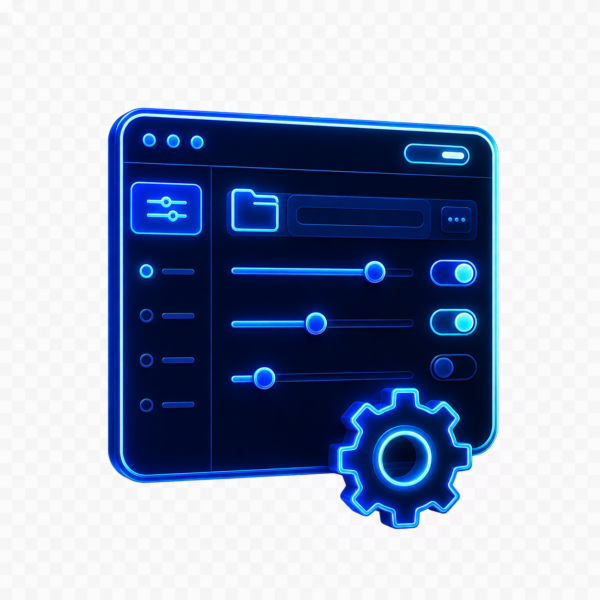
RenderSonic is a Windows desktop application developed by MaxCloudON that automates cloud rendering workflows for 3D artists, studios, architects, and developers.
It connects your workstation to scalable cloud infrastructure and handles:
All without manual setup, queue management, or render node configuration.
RenderSonic automates the entire rendering process in just a few steps.
RenderSonic enables automated cloud rendering workflows for the following 3D applications and render engines through a single desktop interface:
It acts as the software layer that connects your workstation to MaxCloudON’s cloud rendering platform.
With a one-click workflow, you can submit your projects directly from within the interface and let RenderSonic handle the rendering automatically in the cloud.
We are continuously expanding RenderSonic to support more tools.
No setup, no complex configurations - just submit your projects and render.
Powered by scalable CPU and GPU render nodes for fast, reliable results.
Render everything from single frames to large animation pipelines without limitations.
Get an upfront cost estimate before rendering starts - no surprises.
Submit render jobs directly from the interface with a streamlined, one-click process.
Render complex scenes without investing in or maintaining expensive local hardware.
RenderSonic removes complexity from cloud rendering and replaces it with automation.
RenderSonic is built for professionals who want fully automated cloud rendering without managing infrastructure.
RenderSonic is a great fit if you:
RenderSonic may not be the right fit if you need:
In these cases, dedicated cloud servers provide more flexibility and control.
RenderSonic supports automated cloud rendering for supported 3D applications, with additional software currently in development.
RenderSonic runs on Windows 10 or Windows 11 with an internet connection. Your workstation only needs to be capable of running your 3D software. No special hardware requirements as the rendering process is performed in the cloud.
RenderSonic is designed primarily as a desktop application for fully automated rendering workflows. If you need API access and advanced automation capabilities contact us.
Yes, multiple users can access a single account, though it may not be ideal for collaborative workflows. For team-based or studio usage, please contact our support team to discuss suitable options.
Yes, RenderSonic allows you to pause, stop, and adjust certain settings during rendering. For major changes or redesign, the project should be updated locally and resubmitted.
If a render job fails, RenderSonic provides detailed error logs to help you identify the issue. Our support team is available to assist you in resolving problems quickly.
No, RenderSonic includes unmetered data transfer.
Once rendering is complete, all final outputs are automatically downloaded to your local workstation.
All data transfers are encrypted and processed on secure cloud infrastructure. Render files are automatically deleted after a defined retention period – we do not keep copies of your data.
RenderSonic is designed for fully automated workflows. If your project requires custom plugins, proprietary tools, or full system control, you can use MaxCloudON’s dedicated cloud servers for rendering, which provide full administrative access and persistent resources.
Explore practical guides, workflows, and tools across the 3D rendering category.
GPU rendering uses the parallel power of modern graphics cards to create images, animations, and visual effects much faster than

Render farm workflow explained for 3D artists: discover types, step-by-step processes, cost factors, and practical tips for efficient cloud rendering.

Rendering doesn’t have to be slow. In this guide, I’ll show you how to render faster using smarter settings, scene