
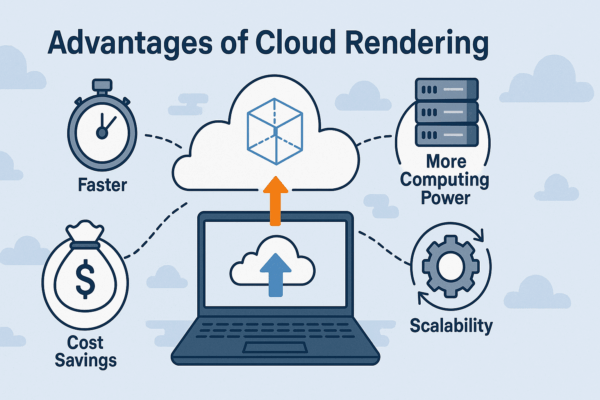
Advantages of Cloud Rendering: Why I Moved Rendering Off My PC
For years I rendered everything on my own workstation, until deadlines made the waiting too expensive. Here are the real
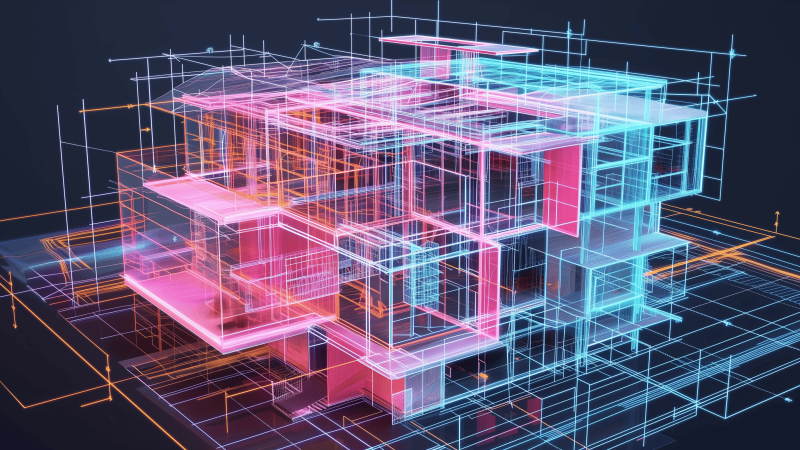
MaxCloudON provides high-performance 3D architectural rendering services through a cloud render farm built for architects, visualization studios, and design teams working on full building projects, exterior concepts, and large-scale developments.
Architectural rendering often requires handling complex scenes, high-resolution outputs, and detailed lighting setups across entire structures. With MaxCloudON, you can process these demanding projects faster and deliver consistent, high-quality results without hardware limitations.
Whether you want a fully automated workflow or complete control over your rendering environment, you can choose between automated cloud rendering with RenderSonic or dedicated cloud servers built for professional architectural workflows. RenderSonic is a desktop app that connects your workstation to the cloud and handles the entire rendering process from upload to final output.
Work without investing in expensive local hardware or maintaining render nodes – run your architectural rendering projects entirely in the cloud.

Use RenderSonic to render your architectural scenes automatically in the cloud. Upload your project, get an upfront cost estimate, and let the system handle rendering from start to finish.

For advanced architectural workflows, use dedicated cloud servers with full control over your environment. Install any software, plugins, or scripts and manage rendering exactly as needed.
Parallel rendering across multiple nodes or high-performance dedicated servers.
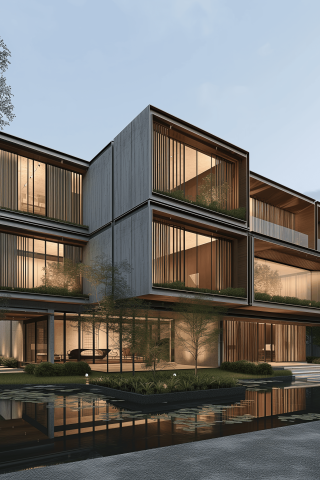
Achieve photorealistic interior designs and exterior visualizations.
Choose between automated workflows or full infrastructure control.
Handle anything from single images to large-scale animation projects.
Upfront pricing for automated rendering or predictable server plans.
Encrypted transfers and isolated environments.
MaxCloudON supports a wide range of architectural workflows, including interior rendering, exterior visualization, and full-scale architectural projects.
Choose between automated rendering with upfront, per-project pricing and no long-term commitment, or dedicated server plans with prepaid options designed for long-term and continuous workloads.
“The fastest dedicated VPS we have used. The rendering nodes are really dedicated and you’ll get what is advertised. It’s applicable, from a small freelance artist to a big design studio.”
Principal/Creative Director of Clusters Creative
“We have used the services of Rend-it (now MaxCloudON) many times when we have not been able to meet the deadline with what we have in our in-house Render farm. Quick and responsible, they have always saved us.”
Founder and CEO of Vaya Studios
“Best cloud. Excellent service and support, awesome pricing. There are no restrictions on the installed software. Once the servers were configured, my company used them for months without making any changes.”
Information Technology Manager at Visual Method
Architectural rendering is the process of creating 2D images or 3D visualizations of a building or space before it is constructed. It allows architects and designers to present concepts, materials, lighting, and layouts in a realistic way for clients and stakeholders.
Rendering can be time-intensive, especially for high-resolution images and animations. Slow rendering delays project delivery and limits how many iterations you can produce. Faster rendering allows architects and visualization teams to deliver results quicker, test more variations, and meet tight deadlines without bottlenecks.
3D rendering requires powerful hardware such as CPUs and GPUs to process complex scenes, lighting, and materials. High-performance workstations and render nodes are expensive to build and maintain. Cloud rendering eliminates this upfront cost by providing access to high-performance infrastructure on demand.
Yes. With dedicated cloud servers, you can install and run any 3D software, render engine, or custom plugins required for your architectural workflow.
For automated rendering, RenderSonic supports selected industry-standard tools such as 3ds Max and V-Ray, and handles the rendering process automatically in the cloud.
MaxCloudON uses secure connections with VPN and certificate-based encryption to protect your data. Each rendering environment is isolated, ensuring your files remain private and protected throughout the entire process.
MaxCloudON offers two flexible approaches: fully automated cloud rendering with upfront pricing using RenderSonic, and dedicated cloud servers for full control over your environment.
You can choose between fast, hands-off rendering or complete customization with private infrastructure, all with transparent pricing and no hidden fees.
Explore practical rendering techniques, production workflows, and tools used in architectural visualization.
For years I rendered everything on my own workstation, until deadlines made the waiting too expensive. Here are the real
I struggled with long render times and flat-looking results until I learned how to master 3ds Max rendering. This guide

Render farm workflow explained for 3D artists: discover types, step-by-step processes, cost factors, and practical tips for efficient cloud rendering.