
When I first started working with Autodesk Maya, I quickly realized that while it’s a powerful tool for animation and VFX, it wasn’t enough on its own. I often found myself stuck – whether it was rendering complex scenes (what rendering actually means), building natural environments, or trying to simulate realistic effects. That’s when I discovered the power of Maya plugins.
In 2026, using the best Maya plugins is no longer optional. As projects get more complex and deadlines get tighter, plugins have become essential for expanding Maya’s core capabilities. From fluid simulations and crowd animations to vegetation modeling and advanced rendering, the right tools can completely transform your workflow.
Over the years, I’ve tested dozens of tools and Maya packs, and in this post, I’ll share the top 10 best Maya plugins for 2026 that helped me work faster, smarter, and deliver more professional results. Whether you’re an animator, VFX artist, or 3D generalist, these plugins will help you push your creativity in Maya further than ever before.
Why Maya Plugins Matter in 2026
By 2026, the demands in animation and visual effects have grown significantly. Whether it’s for realistic simulations, high-end rendering, or crowd scenes that look seamless on screen, clients expect cinematic quality on tight deadlines. When I started out, I tried relying only on Autodesk Maya’s built-in tools, but I quickly ran into some limitations, for example:
- Creating fluid dynamic effects like fire, smoke, or water was slow and difficult to control.
- Building outdoor environments with detailed vegetation or terrain was nearly impossible without help.
- Managing complex lighting setups for HDR or indoor scenes felt heavy and time-consuming.
- Simulating crowds or creatures at scale was frustrating and far from realistic.
That’s when I realized how essential the best Maya plugins had become to my workflow.
These Maya plugins for 2026 didn’t just add features – they solved real, daily production problems. I could simulate water and fire with much more detail, manage lighting with precision, and build natural environments without spending days modeling assets from scratch.
Maya plugins gave me the flexibility to handle everything inside Maya – without switching to standalone VFX software. I could work faster, create better visuals, and stay focused on creative process instead of fighting technical limitations.
For me, these plugins turned Autodesk Maya into a complete, production-ready tool. If you’re working in animation, VFX, or 3D visualization in 2026, the right Maya plugins aren’t optional – they’re a must-have for achieving professional results.
List of the Top 10 Best Maya Plugins to Use in 2026
Over the years, I’ve tested countless tools, but by 2026, I’ve narrowed down my toolkit to the 10 best Maya plugins that consistently solve real production challenges. Each one expands Autodesk Maya’s functionality in specific ways – whether for fluid simulations, rendering, vegetation modeling, or crowd animation. Here’s my personal list of the top Maya plugins in 2026 and how I use them in my workflow:
Arnold Renderer
- Category: Rendering Plugin
- Use Case: CPU and GPU rendering, complex lighting, volumetric effects
- Why I Use It: Arnold has been my go-to renderer for years. Its combination of CPU ray tracing and GPU acceleration gave me the flexibility to render everything from small shots to full scenes with detailed lighting setups. It handles complex shaders, volumetric fog, and indoor/outdoor lighting without compromise – a must-have for rendering simulations in Maya.
Phoenix FD
- Category: Simulation Plugin
- Use Case: Fire, smoke, fluid, and foam simulations
- I used to struggle with fluid effects until I added Phoenix FD to my toolkit. It delivers physically accurate fire, water, and smoke simulations directly inside Maya. Whether I’m creating splashes, foam, or cinematic explosions, this plugin handles it all – much better than the default tools.
Golaem Crowd
- Category: Crowd Simulation
- Use Case: Battle scenes, crowd behaviors, urban environments
- Why I Use It: Creating realistic crowds was always tedious – until I tried Golaem. It let me populate entire city streets or battlefields with thousands of characters using smart, behavior-based animation. It’s an artist-friendly plugin that turns massive scenes into manageable tasks.
SpeedTree for Maya
- Category: Environment / Vegetation
- Use Case: Vegetation modeling, terrain creation, natural assets
- When I need to build outdoor environments with realistic vegetation, SpeedTree is my go-to plugin. It offers a massive library of trees, bushes, and plants, and I can customize scenes with forests, grasslands, or even detailed single trees . It integrates perfectly with Maya and saves hours of modeling and tweaking.
Redshift Renderer
- Category: GPU Rendering
- Use Case: Fast rendering with advanced shaders
- Why I Use It: When I need speed, Redshift delivers. Its GPU acceleration cuts down render times dramatically. Plus, it supports displacement, volumetric effects, and highly complex shaders, making it one of the best Maya plugins for high-end production when deadlines are tight. Its lighting controls gave me flexibility in both indoor and outdoor scenes, and it integrated smoothly into my workflow. If you need GPU power without hardware limitations, try a cloud-based Maya render farm to run your plugin-heavy scenes faster.
Yeti
- Category: Grooming / Simulation
- Use Case: Fur, feathers, and hair simulation
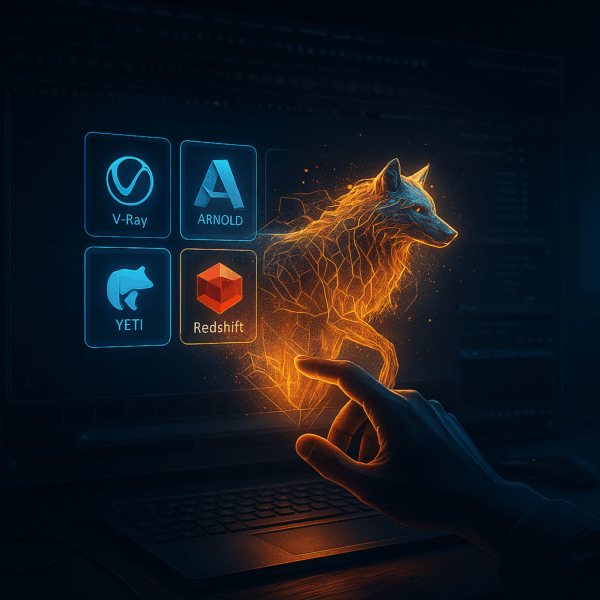
- Yeti is unmatched for creature and character work. It lets me groom fur, feathers, and complex surface simulations with realism. Combined with Maya’s rigging and animation tools, Yeti brings creatures to life in a believable way.
HDR Light Studio
- Category: Lighting / HDRI
- Use Case: Designing HDR lighting setups for indoor/outdoor scenes
- Why I Use It: Lighting is one of the trickiest parts of 3D work, but HDR Light Studio makes it easier. I can custom design HDR images, adjust lighting in real-time, and fine-tune reflections and shadows. It’s perfect for product shots, studio setups, and daylight environments alike.
Massive Prime
- Category: Advanced Crowd Simulation
- Use Case: AI-driven crowds with complex behaviors
- When I need full control over crowd behavior, Massive Prime gives me AI-based agents with detailed control over actions and responses. Great for complex scenes like armies, large-scale battle, stadiums, or sci-fi cities. Its ability to generate visually stunning VFX crowds with realistic simulations made it a must-have. Actually Massive Prime is more advanced than Golaem, but also more demanding plugin.
RealFlow
- Category: Advanced Simulation
- Use Case: Complex fluid, smoke, and interaction effects
- Why I Use It: When Phoenix FD falls short, I turn to RealFlow for more advanced fluid simulations. It allows me to create complex fluid dynamic effects and simulate interactions between fluids, soft bodies, and other elements. RealFlow is ideal for realistic, non-linear simulations involving water, smoke, and surface interactions.
V-Ray for Maya
- Category: Rendering
- Use Case: Photorealistic rendering, shading, lighting control
- V-Ray is one of the most reliable and artist-friendly Maya plugins. It supports global illumination, complex shaders, volumetric effects, and physically based lighting. Whether I’m rendering interior visualizations or high-end VFX, V-Ray consistently delivers the professional look I need.
Each of these Maya plugins solved a specific production problem I faced. Together, they expanded Autodesk Maya’s core functionalities, turning it from a powerful tool into a complete animation and VFX powerhouse in 2026. They helped me save time, deliver high-quality results, and transform my scenes into polished, professional results. In 2026, these aren’t just useful – they’re the best Maya plugins for any serious VFX or animation workflow.
While these are my go-to plugins inside Maya, it’s also helpful to look beyond a single tool. If you’re comparing platforms, here’s a breakdown of the best 3D rendering software used by professionals in 2025–2026.
How These Plugins Expand Maya’s Functionalities
Looking back at my experience, I can confidently say that these Maya plugins were not just optional add-ons – they were essential for turning Maya into a full-scale production solution. Autodesk Maya on its own is already an animation and VFX powerhouse, but when combined with the right plugins, it became capable of handling every challenge I faced.
For instance, when building complex outdoor or indoor scenes, SpeedTree and HDR Light Studio provide me efficient vegetation modeling, terrain modeling, and precise lighting controls. And when I needed to create fluid dynamic effects or simulate volumetric environments, Phoenix FD and RealFlow delivered realistic results that made my projects stand out.
What impressed me most was how these Maya plugins worked together. Instead of building separate models for every detail, I could rely on massive library assets and artist-friendly plugin workflows that saved me time. Whether it was handling creature physical simulation with Yeti, generating visually stunning VFX crowds with Golaem Crowd, or using HDR Light Studio to design HDR images for lighting, each plugin solved a specific creative challenge. They allowed me to create complex effects in a realistic way while keeping my workflow fast and efficient. For artists looking to improve their render performance, this guide on how to render faster outlines techniques that go beyond just plugin selection.
In short, these plugins for Maya transformed my projects from good to professional-grade productions – proving why they are the best Maya plugins to use in 2026.
Why These Are the Best Maya Plugins to Use in 2026
After years of working with Autodesk Maya, I’ve realized that its true power doesn’t come from the base software alone – it comes from how far you can take it with the right plugins. These tools solve real production problems and elevate every part of the workflow.
After years of working with Autodesk Maya, I’ve realized that its true power doesn’t come from the base software alone – it comes from how far you can take it with the right plugins. These tools solve real production problems and elevate every part of the workflow.
Each plugin I’ve used addressed a specific challenge – from creating indoor and outdoor scenes with terrain modeling, to generating VFX crowds, to handling creature physical simulation. They expanded Maya’s capabilities far beyond its defaults and gave me the tools to work faster and smarter.
In 2026, the best Maya plugins are not just time-savers – they’re essential for any serious VFX or animation workflow. Whether it’s through GPU servers for rendering, dynamic simulations, or access to massive asset libraries, they transform Maya into a complete production platform.
If you’re serious about animation, visual effects, environment design, or character work, I strongly recommend exploring these Maya plugin packs. Integrating them into your pipeline is one of the smartest ways to stay competitive — and consistently deliver results that stand out.
Sources:
- Autodesk Maya Official
- Arnold Renderer
- Phoenix FD
- Golaem Crowd
- SpeedTree
- Redshift Renderer
- Yeti Plugin
- HDR Light Studio
- Massive Prime
- RealFlow
- V-Ray for Maya
- FX Guide
- Animation World Network
- VFX Voice
Frequently Asked Questions
Why should I use Maya plugins instead of standalone animation software?
In my experience, standalone animation software can be powerful, but it often requires exporting and importing assets, which slows down production. Maya plugins integrate directly into Autodesk Maya, allowing me to keep everything in one place. This seamless workflow turned Maya into a true VFX powerhouse without the need for constant back-and-forth between programs.
Which Maya plugins are best for creating outdoor and indoor scenes?
From my projects, SpeedTree, HDR Light Studio, and V-Ray stood out. SpeedTree gave me vegetation modeling and terrain modeling, HDR Light Studio allowed me to design HDR images with precise lighting options, and V-Ray provided realistic simulations with highly complex shaders. Together, they made creating outdoor and indoor scenes efficient and visually stunning.
What plugins help with character animation and creature physical simulation?
For character animation, I relied heavily on Golaem Crowd for behavioral animation and Yeti for creature physical simulation. These plugins allowed me to create complex characters and crowds in a realistic manner, solving problems that Maya’s default tools couldn’t handle alone.
How do Maya plugins improve rendering simulations?
Arnold, Redshift, and V-Ray were my go-to solutions. Arnold’s CPU ray tracer, Redshift’s GPU acceleration, and V-Ray’s highly complex shaders gave me the flexibility to handle rendering simulations with speed and accuracy. They provided lighting options and volumetric effects that made my final renders look professional and polished.